
Generator Removal, Rebuild & Refit, 54m Superyacht
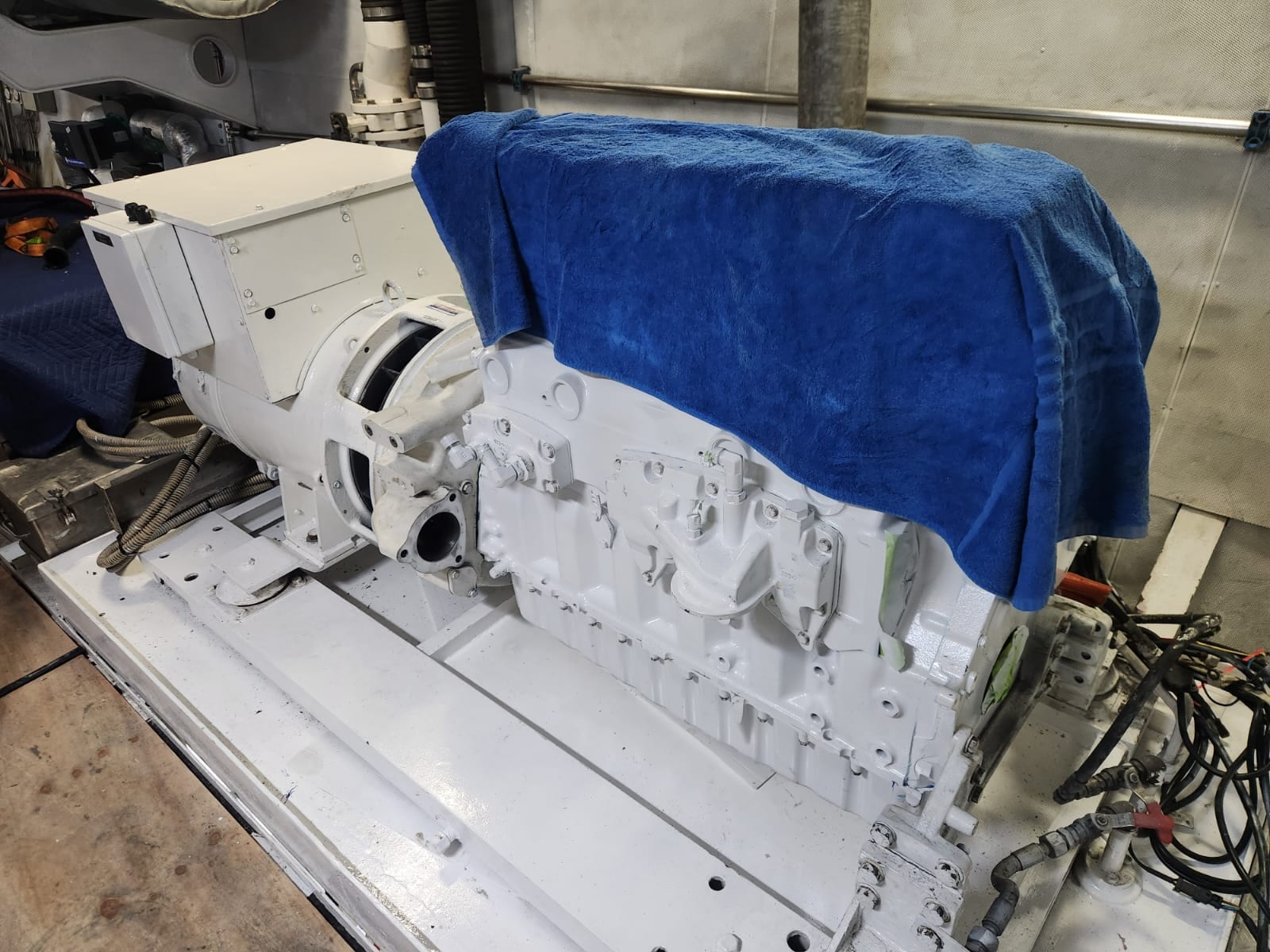
The port generator on a visiting 54m superyacht needed its prime mover and alternator out for rebuild, and there was no straight path from the engine room to the beach club door. We rigged the lift with a scaffold transition beam, walked both units out on trolleys, brought them back rebuilt two and a half weeks later and had the set running on the switchboard, then stayed aboard six weeks working through the engineer's list.
Six weeks alongside
-
01
9 May
The path measured
Long block and alternator measured against the engine room doorway; a transition beam and trolley plan agreed with the scaffolders.
-
02
13 to 14 May
Both units out
Scaffold frame and beam rigged, prime mover and alternator off the skid and out to the beach club, the engine craned off the swim platform.
-
03
15 to 29 May
Rebuild and parts
Engine with the rebuilder, alternator rewound and tested at CEC Engineering; the return slipped a week on parts from Singapore.
-
04
30 May
Back on the skid
Beam reinstated, a second trolley built in the engine room, both units walked back and coupled, alignment checked on a dial indicator.
-
05
6 to 9 June
Online
Clean mechanical start; no output from the alternator traced to lost residual magnetism, excited by Onboard Electrical and put on the board.
-
06
June
The engineer's list
Watermaker, fuel coolers, purifier, sea strainers, fabrication and a run of small jobs, with a daily note to the captain.
The port generator on a visiting 54m superyacht had reached the point where the prime mover and the alternator both had to come off the skid, the engine to the rebuilder and the alternator to CEC Engineering for its rewind and test. The set is a 160 kVA unit on a Caterpillar C9. The problem was not the rebuild. It was the route out: an aft engine room with a tight doorway, a step down and a turn before the beach club, and no crane reach inside the hull.
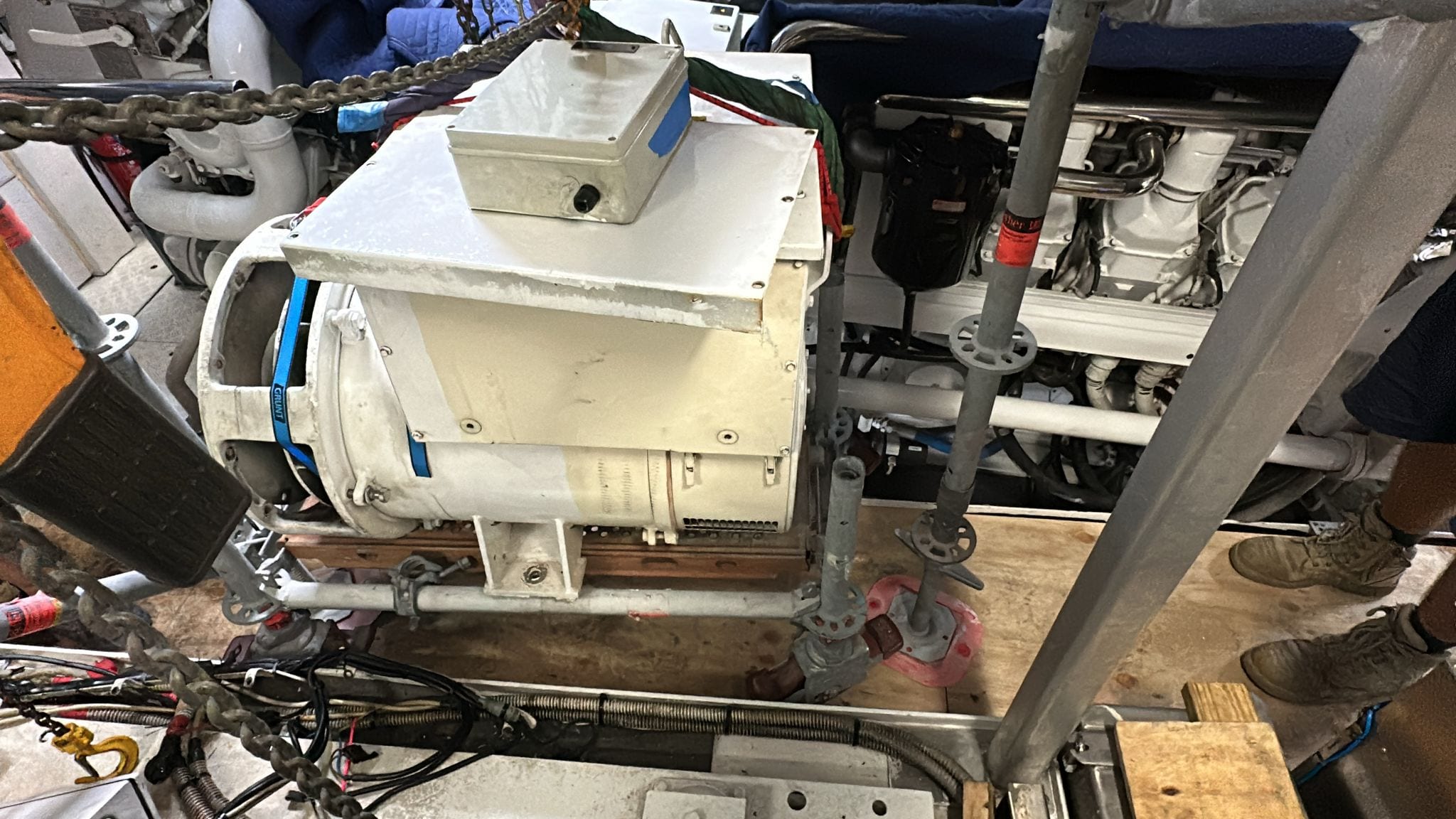
We walked the path first with a tape and a phone camera. The long block measured roughly a metre by 830 by 650, the alternator a shade smaller, and the doorway left little around either. The plan became a transition beam: Marine Scaffolding built a frame over the generator skid and a beam clamped through the doorway, so a chain block could take each unit off the skid, onto a trolley, along the engine room floor and out to the beach club where the yard crane could reach. Structural ply went down to protect the sole and give the trolleys a flat run.
The yacht's engineer had the generator electrically disconnected and the bottom mounting bolts were all that held it. Both units came out over two days in the middle of May and went their separate ways, the prime mover lifted from the swim platform by crane. With the skid empty, the crew took the chance to paint the bottom plate, so the lifting structure came down and the beam went with the scaffolders until it was needed again.
The return slipped a week while parts for the engine came through Singapore and Brisbane. When both units were ready we reinstated the beam, built a second trolley inside the engine room for the transfer from trolley to skid, and on the last Friday of May moved the alternator and the rebuilt prime mover back along the same path. The rebuilder's technician bolted the engine down and tightened the sump while we coupled the alternator, checked the alignment on the flange with a dial indicator and reconnected the loom. By three in the afternoon the lifting gear was off and the scaffold coming down.
The first start was clean mechanically but the alternator gave the switchboard nothing: no online lamp, no phase readings. Onboard Electrical traced it to lost residual magnetism after the rewind, a quick excitation brought the output up, and the set went online.
That was the headline job. The rest of May and June was a working list from the yacht's engineer, one of our engineers aboard most days and a daily note back to the group so the captain could see what had been done. The watermaker had its particulate filters cleaned, belts and high pressure pump oil changed and new three-way valves fitted to the overboard discharge, with spacers made to suit. Both fuel coolers came off for new fittings, gaskets and anodes, flushed and refitted. The oil purifier was drained and inspected through its cover, the compressors had their oil changed, and every main engine and generator sea strainer was pulled, cleaned and refitted.
Some of it was fabrication. The fuel hose reel was remounted on a new bracket, turned through 180 degrees so the deck grate above the fuel line could lift out again. A bracket for the generator filter housing was cut and welded in the workshop. Behind the engine room wall mesh we found the framing rusted through, cut it out, primed the steel and built a new aluminium frame to carry the mesh. The extractor fan in the bow thruster compartment had burnt wiring, so the unit came out, got a new fan assembly and went back in on test.
The smaller jobs are the ones a crew notices: a new seawater pipe for the stabiliser system, boiler relief valves, the steriliser anode, a gas strut on the crew mess hatch, a third hinge on a door, a leak chased through the shore water hose with the hose pressurised on the dock, and a galley oven fitted, vented and run through its clean cycle. Six weeks after the first lift the final invoices went to the captain and the yacht left the Gold Coast with both generators online.
Services rendered
From the project
Related services
This job on video
The lift back in, filmed on the day: the beam through the doorway, the trolleys and the set going back onto its skid.
Have a similar project in mind?
Tell us about your vessel and what you want done. We’ll define the scope, quote the work and manage it through to handover.