
Hydraulic Davit Crane Refurbishment & Load Test, Motor Yacht
A Besenzoni hydraulic davit crane came off a motor yacht for a full refurbishment during her refit: stripped to components, five cylinders, the slewing swivel and the power unit overhauled and pressure-tested, the hoses condition-reported and renewed, the structure repainted, then rebuilt in our Coomera workshop, craned back aboard at The Boat Works and load-tested to its 600 kg plate rating before sign-off.
From workshop to load test
-
01
Stripped to components
Dismantled in our Coomera workshop, with the five cylinders, valve stack, slewing swivel and power unit sent to A.T. Hydraulics.
-
02
Overhauled and pressure-tested
Cylinders resealed and tested at 2,000 to 2,500 psi, the relief valve verified at 175 bar, and all fifteen hoses renewed.
-
03
July to August
Repainted and rebuilt
Superyacht Solutions repainted the structure at The Boat Works; reassembly in the workshop brought a new Dyneema line and the overhauled swivel.
-
04
27 August
Craned back aboard
The crane travelled by truck to The Boat Works, where Transmarine Cranes lifted it aboard and we bolted it down.
-
05
3 September
Back in the water
The vessel relaunched with the crane aboard, ready for a load test with water bags and a calibrated crane scale.
-
06
The next morning
Load-tested to the plate
A 400 kg dynamic test through the full range, then 600 kg held three minutes at full extension. No movement, no leaks.
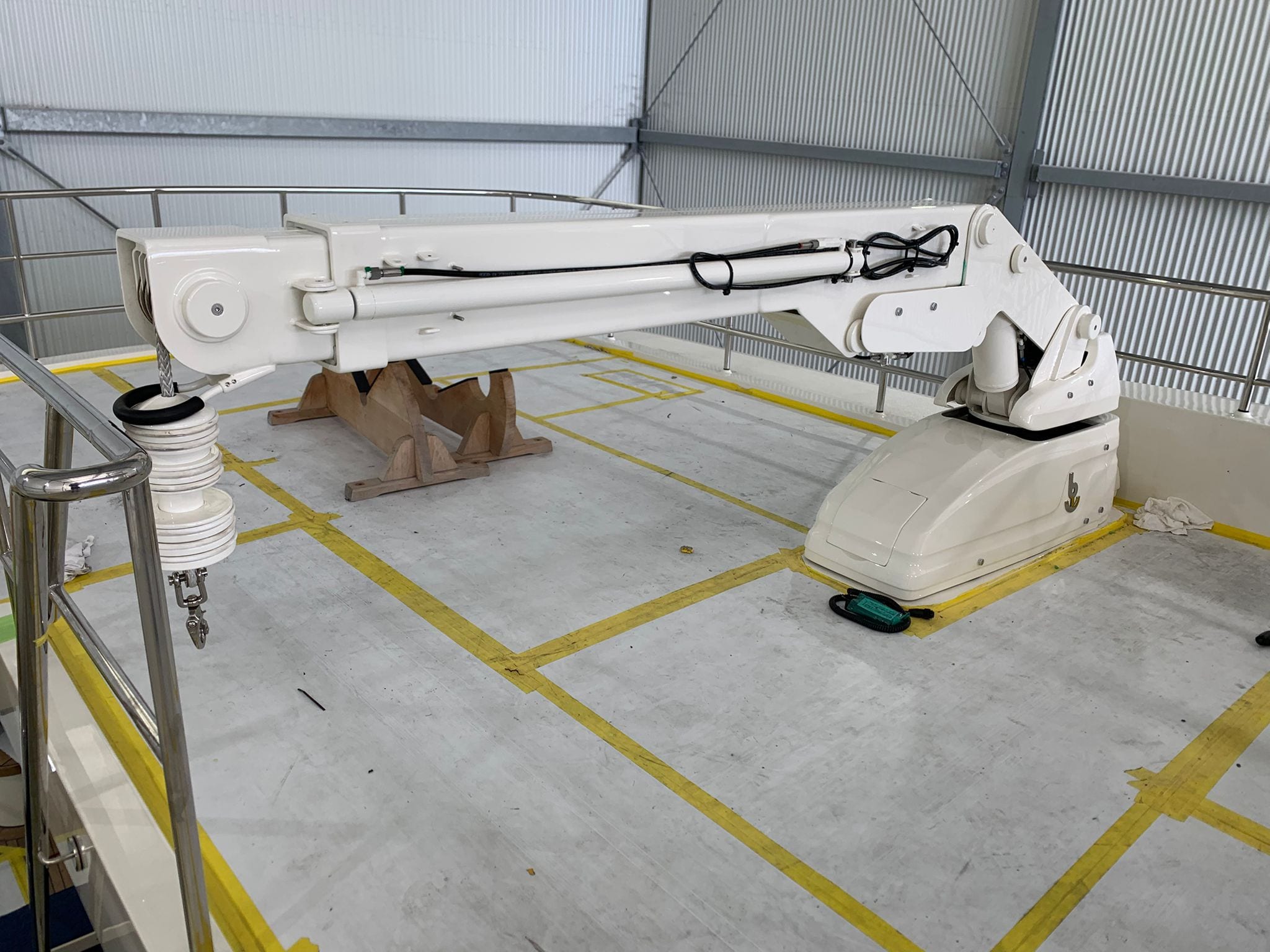
The davit crane on a motor yacht refitting at The Boat Works, Coomera, was booked in for a full refurbishment rather than a service. The unit is a Besenzoni hydraulic crane with a static work load of 600 kg on its plate, and it lifts the tender from the aft deck.
After years of service the paint, the seals and the hydraulics had all reached the end of their run at once. We removed it, dismantled it to components in the Coomera workshop and sent the five hydraulic cylinders, the valve stack, the slewing swivel and the power unit to A.T.
Hydraulics for strip-down inspection. The findings put the job well past a reseal: a dented chrome rod on one cylinder needing a new rod section, corroded fittings and honed barrels on the others, one gland machined to correct wear, and a broken bronze backlash adjuster and worn bearing inside the swivel.
All fifteen hydraulic hoses were condition-reported as well. Every one had gone rigid with age, several were kinked or heat-damaged, three were leaking at the fittings, and the report recommended replacing the lot.
The cylinders came back resealed throughout, rod seals to wear rings, and pressure-tested between 2,000 and 2,500 psi with no external or bypass leakage. The power unit was cleaned, resealed, refilled and run up, with its relief valve verified at 175 bar and the valve stack proven on every spool.
The structure, boom sections and covers were repainted by Superyacht Solutions at The Boat Works. Reassembly then ran through July and August at the workshop. Pin bushes had picked up overspray and were cleaned back to bare metal before a pin went near them; the slewing pedestal was rebuilt around the overhauled swivel, the power pack and valve block refitted, and the boom, extension arm and boom-head sheaves brought back together on the lift table with the hydraulic lines run through.
A new Dyneema lifting line was spliced up, found long on the first fit, and re-made shorter with a little extra taken off to allow for the rope bedding in over time, and the repainted counterweight went back on so it sits snug against the boom head.
One setback: the luff cylinder wept oil on the first workshop test, so it went straight back to A.T. Hydraulics, was resealed again and refitted before the crane left the shed.
On 27 August the assembled crane travelled by truck from Coomera to The Boat Works, where Transmarine Cranes lifted it aboard and we bolted it down on the masked and prepared deck footprint.
The vessel went back in the water on 3 September, and the next morning we were aboard with water bags and a calibrated crane scale. A 400 kg dynamic test ran the crane through full boom extension and retraction, rope up and down, slew both ways and luff up and down.
A 600 kg static test, the plate limit, was then held for three minutes at full extension with the rope fully raised. No movement, no leaks, and the captain was briefed on the results before the written commissioning and load-test report followed.
While the crane was out, the same crew reinstalled the flybridge helm wheel with a fresh steering-shaft seal, greased and inspected the deck capstans, and pressure-tested the hydraulic bow thruster before relaunch.
The davit went back into service with its test results on paper, which is where an insurer or surveyor will want to find them.
Services rendered
From the project
Related services

Have a similar project in mind?
Tell us about your vessel and what you want done. We’ll define the scope, quote the work and manage it through to handover.