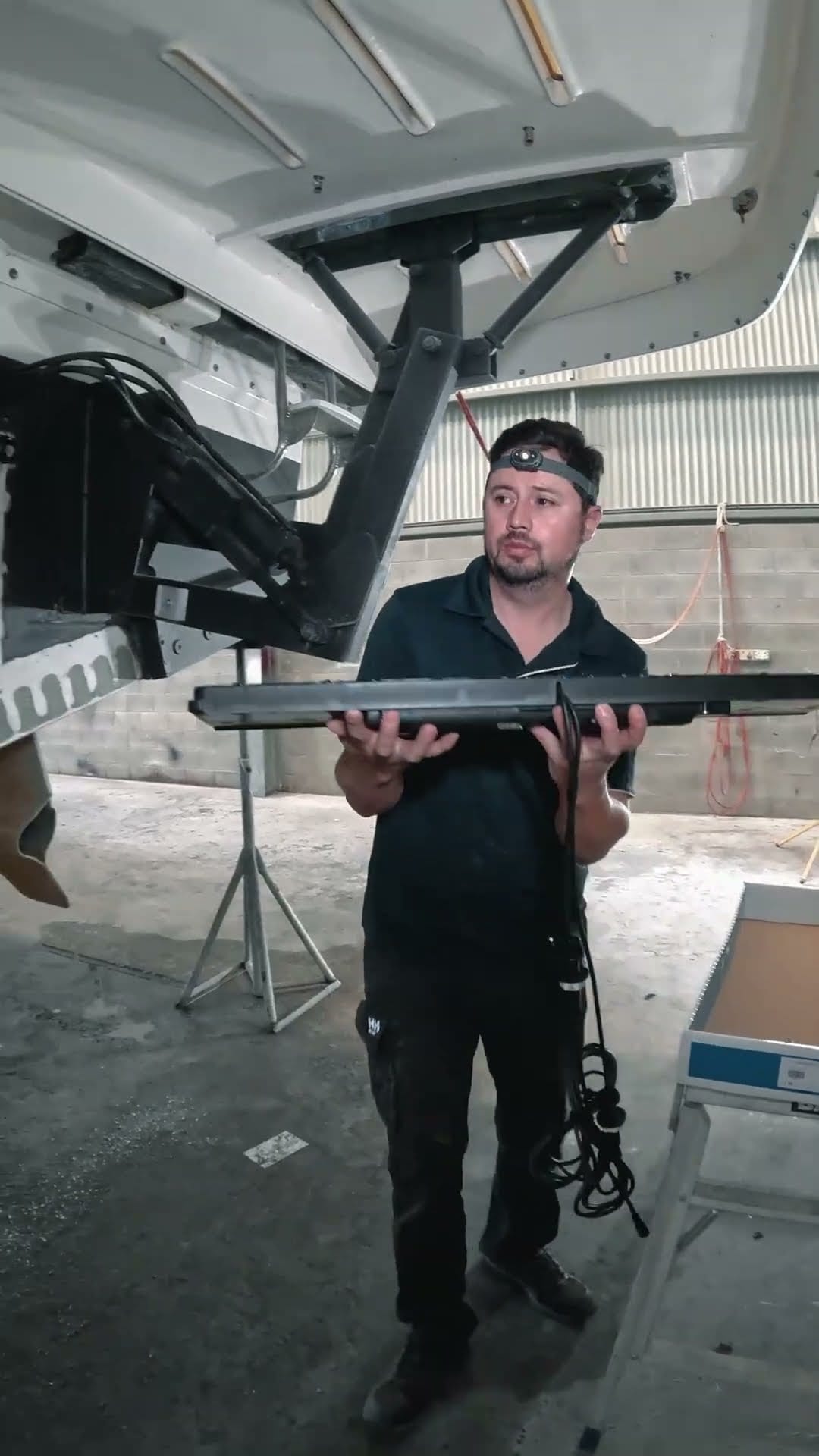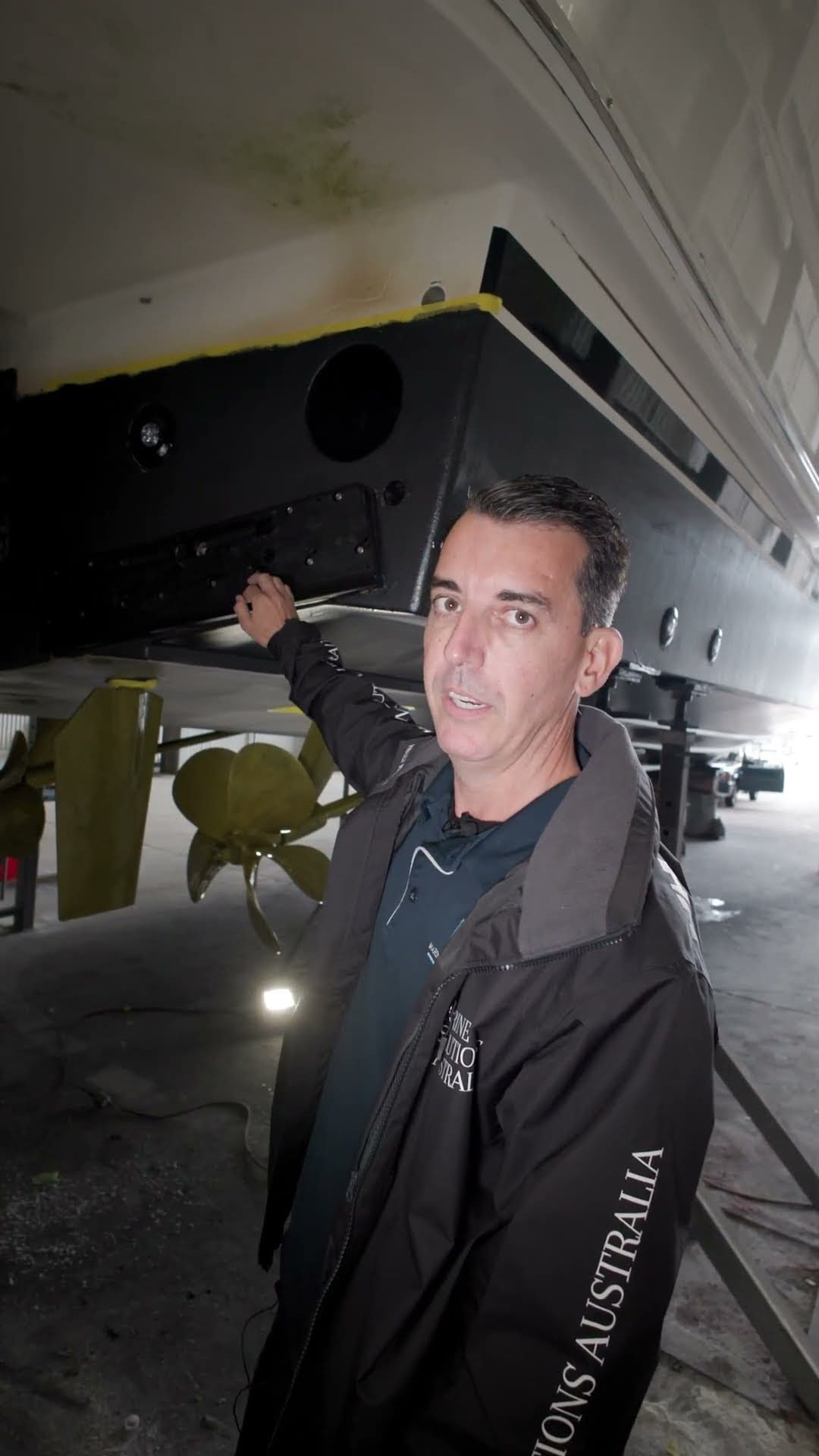

Zipwake sizing is done at the transom. The question "what size Zipwake do I need?" has three parts: which series suits the length of the vessel, how much of the transom the interceptors should cover, and which shapes fit around the drives and propellers.
Zipwake publishes a simple method for the middle one, and it does most of the work. This guide walks through all three the way we do when a client sends us their vessel's details.
Series S or Series E: length gets you close
Zipwake builds two families of interceptors. Series S is the compact range, designed for planing and semi-planing vessels from 6 to 15 metres (20 to 50 feet), with a 30 mm blade stroke. Series E is larger and heavier, built for vessels up to 30 metres (100 feet), with a 60 mm stroke that gives a big hull more lift to work with.
Zipwake's quick-sizing charts draw the line less sharply than those numbers suggest. Below about 10 metres, Series S rates well and Series E is marked oversized. From 10 metres up, the Series S rating falls away with length, and it falls faster when the interceptors cover only a little of the transom, until Zipwake marks it undersized and points to Series E. Series E is the mirror image: good to excellent once a vessel is past about 20 metres.
So in the 10 to 20 metre band, both series can work, and what decides it is how much of the transom you can cover. The two families aren't sealed off from each other, either: Series E interceptors can be added to a Series S system.
The Zipwake factor: how much of the transom to cover
Zipwake rates a layout with one number, the Zipwake factor, Z. Add up the lengths of every interceptor on the transom, then divide by the chine beam at the transom, the width across the bottom of the hull from chine to chine where it meets the transom.
| Zipwake factor (Z) | Zipwake's rating |
|---|---|
| 0.3 | Minimum |
| 0.6 | Good |
| 0.9 | Excellent |
The worked example on Zipwake's Series S sheet is a hull with a 3.7 m chine beam, fitted with a 600S and a 450S on each side and a 450S V19 on the centreline. That is 2.55 m of interceptor, and 2.55 divided by 3.7 gives a Z of about 0.7: comfortably good.
The advice that goes with the number is blunt. Cover as much of the beam as you can: Zipwake says its interceptors cannot span too much of it, and that a full beam is always the best arrangement for lift against drag. In practice the limit is the transom itself, with its drives, propellers and fittings, which is where the next two sections come in.
What 300S, 450S, 600S and 750S mean
The numbers in Zipwake's model names are interceptor lengths in millimetres. A 300S is a 300 mm Series S interceptor, a 450S is 450 mm, and the straight Series S units run on through 600 and 750 mm. Series E straight units run 400, 600, 800 and 1000 mm.
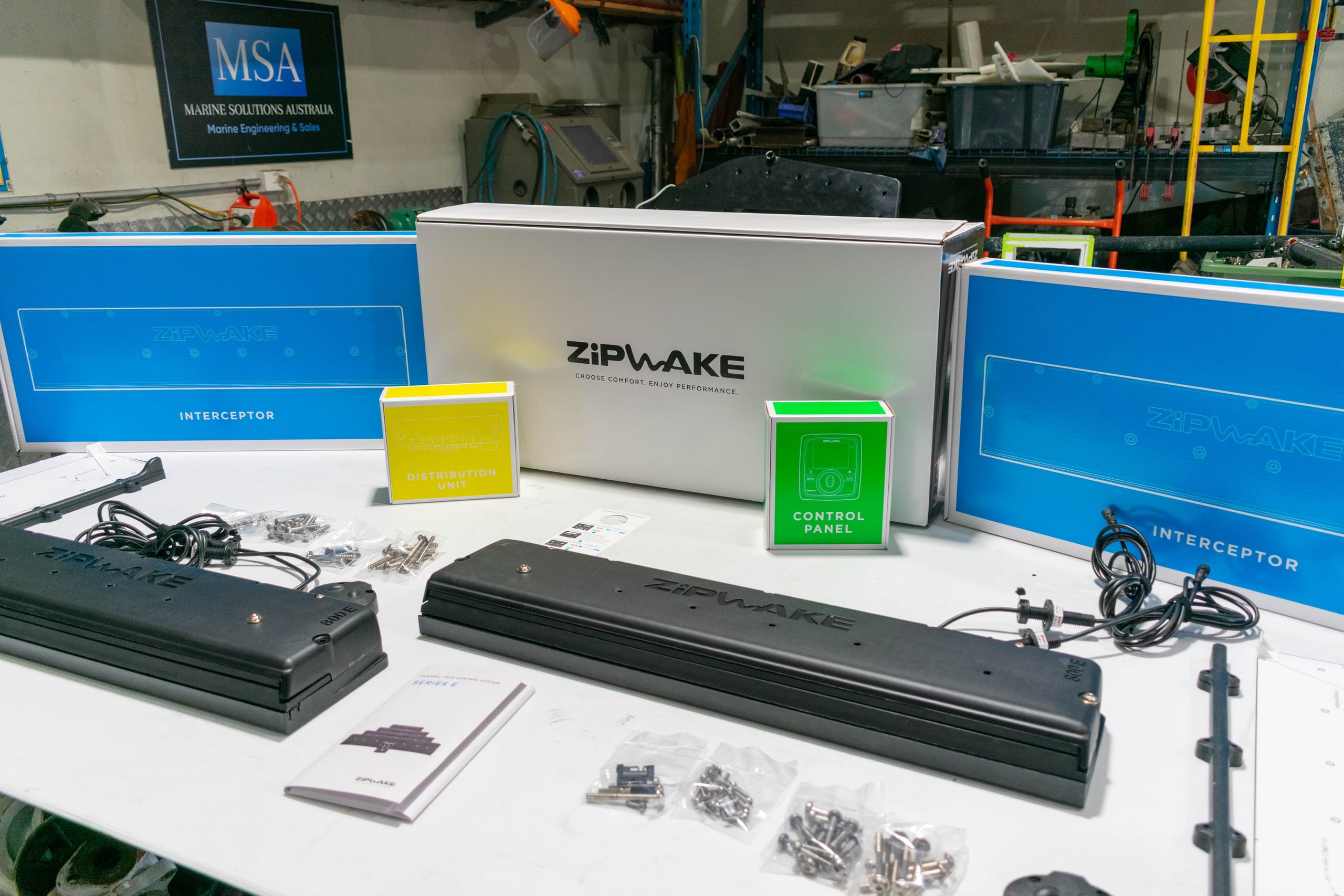
Kit boxes take the same names. A KB450-S PRO, for example, holds two 450 mm interceptors with a control panel and a distribution unit: a complete system for a vessel that needs one interceptor each side. Chine kits swap the straight pair for a port and starboard chine interceptor, and integration kits include an Integrator Module so the system runs from the vessel's multifunction display.
A kit is a starting point, not a limit. Interceptors are also sold on their own, so a layout like the 3.7 m example is built from a kit plus the extra units the transom calls for.
Choosing interceptor shapes around the drives
Straight interceptors are the default, but the shaped units are where most of the fitting problems get solved.
- Chine interceptors sit at the outer edge of the hull bottom, where lift does the most for pitch and roll. Zipwake's rule is that a chine interceptor gives the lift of a straight one a size larger mounted further inboard, which is why it calls them the go-to choice. They are especially useful where an outboard or sterndrive leaves little transom beside it.
- Intermediate interceptors (Series S, 300 mm) are for the tight gaps between multiple outboards or sterndrives. The blade leaves a narrower trail, so it can sit close to a propeller without upsetting the water flowing into it.
- V-shaped interceptors (Series S, 450 mm, as the V13, V16, V19 and V22) fill the centreline gap between twin outboards or sterndrives, or between twin propeller tunnels, on hulls with 11 to 24 degrees of deadrise.
- Tunnel interceptors (Series E, 600 mm, in three radii) mount over propeller tunnels, putting to work a part of the beam that would otherwise give no lift.
- The round interceptor (Series E, 400 mm) suits a convex, rounded hull bottom, and can sit closer to the edge than a straight unit could.
Catamarans are covered too. Zipwake's interceptors can be combined to suit a multihull, power catamarans included.
What the transom has to allow
A sizing number only helps if the interceptors can go where it puts them. Zipwake's installation guide sets out the conditions, and they are worth checking before anything is ordered:
- The mounting surface has to be close to flat, within 2 mm, and a convex hull bottom can curve by no more than 5 mm under an interceptor.
- Interceptors start as far outboard as possible while staying well inside the edge of the transom, and the layout works inwards from there.
- On outboards and sterndrives they need clearance from the propellers. Zipwake's layouts keep straight and chine interceptors at least 75 mm from the zone around each propeller, while an intermediate can sit right at its edge.
- Each interceptor's cable passes through the hull on a self-sealing fitting, above the waterline or concealed behind the interceptor, on a 3 m cable that can be extended to 6 m.
Old trim tabs, transducers and swim platform brackets can all compete for the same strip of transom, so most layouts are a negotiation with what is already there. That is the part a chart can't do for you.
PRO and older Zipwake systems
PRO is Zipwake's newest generation, in both series. Sizing works the same way; what changes is the speed, with Zipwake quoting a full blade stroke in 0.3 seconds. If a vessel already has a Zipwake system, the PRO upgrade kit replaces the distribution unit and the servo units and keeps the interceptors, so a layout chosen years ago carries straight over. Our Zipwake page covers what the upgrade involves.
What we need to size a Zipwake for your vessel
Zipwake's own sizing questionnaires ask for the same things we do, and having them ready keeps the first conversation short:
- The make, model, year, length, beam, weight and top speed
- The drives: shaft, outboard, sterndrive, pod or waterjet, how many, and the propeller diameter
- Measurements of the mounting surface on the transom, plus the transom, deadrise and chine angles
- Photos of the transom
From there we work out the series, the Zipwake factor and the layout, and check it against the propellers and the fittings already on the transom before anything is ordered.
Marine Solutions Australia is an authorised Zipwake dealer: we supply kits and interceptors anywhere in Australia, and fit and sea-trial systems at Gold Coast City Marina, Coomera.
If you are weighing up Zipwake, send those details through the contact page. Measurements and a few photos are usually enough for us to come back with a layout.