
Inboard, outboard or sterndrive is the first question on a new boat and the last one on an old boat, when the engine is worn and the repower quote hangs on whether you keep the drive you have. The three layouts put the engine in different places, drive and steer the propeller differently, and age differently in salt water. This guide sets out how each one works, where each is the right answer, and what we look at before recommending a change at repower time.
The three layouts, and a fourth
An outboard is the engine, gearbox and propeller in one unit, hung on the transom. It steers by pivoting the whole unit, so the thrust points where you turn the wheel, and it tilts clear of the water when the vessel is not in use.
A sterndrive, also called an inboard/outboard or I/O, puts a car-derived engine inside the hull against the transom and drives a leg that passes out through the transom on a gimbal. The leg trims and steers like an outboard; the engine is serviced like an inboard. Most are petrol V6 and V8 units from MerCruiser or Volvo Penta, with diesel versions on larger craft.
A shaft-drive inboard sits further forward, almost always a diesel on anything over 30ft, coupled through a gearbox to a shaft that leaves the hull through a stern gland, runs on a strut and turns a fixed propeller. A separate rudder does the steering. This is the layout on most cruisers, flybridge motor yachts, commercial vessels and superyachts.
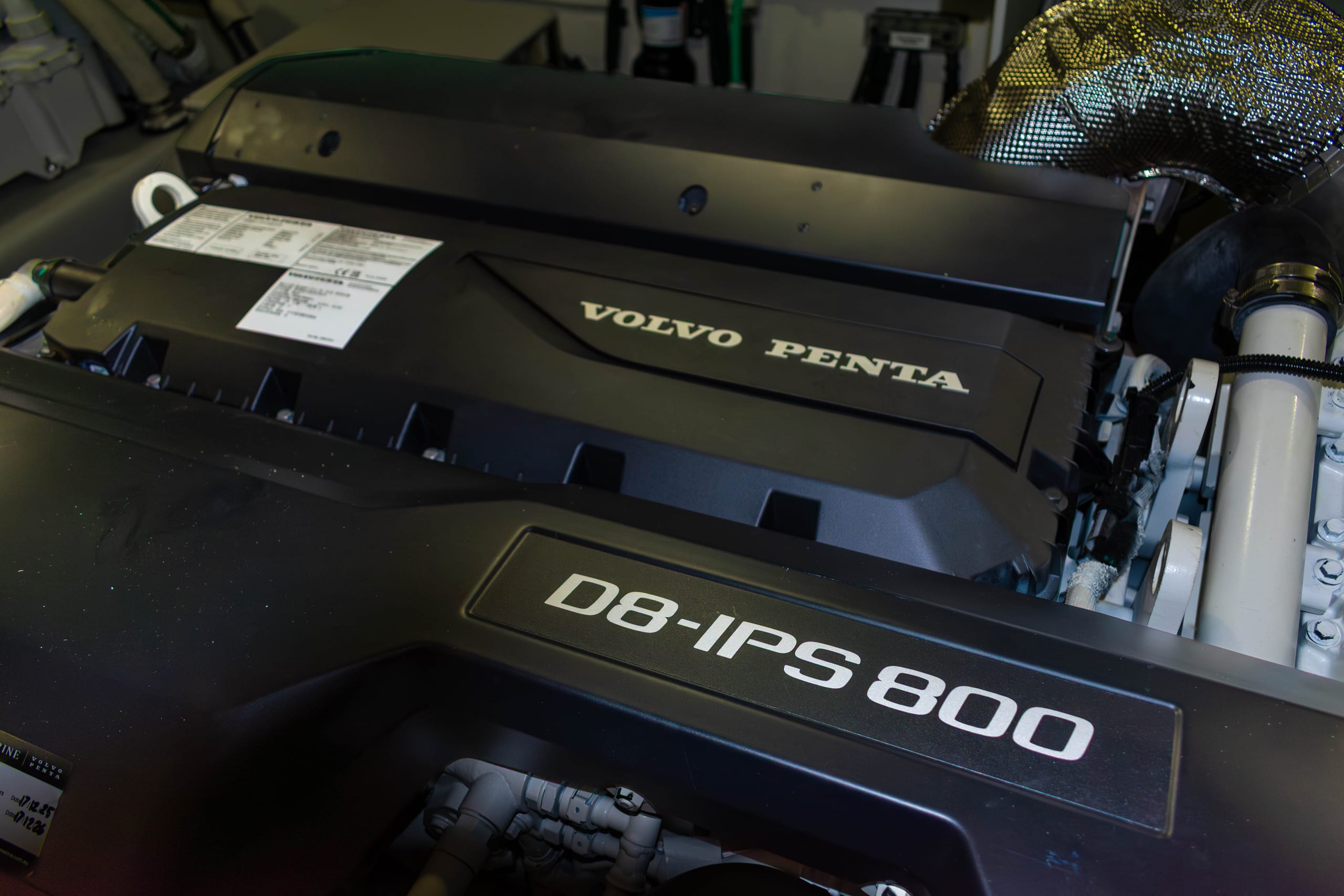
The fourth is the pod drive, Volvo Penta IPS and its equivalents: an inboard diesel driving a steerable pod through the bottom of the hull, with forward-facing propellers and joystick control. Sailing yachts have their own relative, the saildrive, an inboard diesel driving a fixed leg through the hull bottom. Both are inboards for servicing purposes, with a leg in the water to look after. Jet drives make a fifth for shallow-water craft and personal watercraft, and sit outside this guide.
Outboards: simple to service, simple to repower
Everything on an outboard is reachable from the cockpit or the trailer, which is why it is the easiest engine on the water to look after. A 100-hour service is oil and filters, gear oil, the water pump impeller, spark plugs and anodes, all done with the cowl off. Trimmed up out of the water between trips, the leg stays clear of growth and the worst of the corrosion, though the cooling passages inside still want a fresh-water flush after every salt-water run.
The repower argument is the strongest of the three. A replacement outboard bolts to the same transom, and the work is rigging, controls, fuel and batteries rather than engine beds and alignment. That is why outboards have moved well beyond trailer boats: twin and triple rigs now power day boats, catamarans and sports fishers into the 40ft range that would once have carried diesels.
What you give up is the transom and the balance. Outboards take the swim platform, they put weight aft on hulls that were not always drawn for it, and a big multi-outboard rig burns petrol at a rate a diesel of the same output would not. On a light planing hull run at speed a modern outboard is efficient for its weight; the fuel argument for diesel is made at cruising speed on heavier hulls. On a vessel kept in a marina berth the tilted leg is still out in the weather, where stainless, aluminium and salt spray keep working on each other.
Sterndrives: inboard power, outboard handling, and a transom to look after
The sterndrive gives a bowrider or sports cruiser a clean transom, a low centre of gravity and inexpensive horsepower from a car-derived engine, with the trim and shallow-water tilt of an outboard. On a trailer or in a dry stack it is a sound arrangement, and has been for decades.
Berthed in the water, it is the most demanding of the three in salt. The leg is an aluminium casting that lives submerged unless it is trimmed up, and the joint where it passes through the transom relies on rubber bellows over the universal joints, the exhaust and the shift cable. When the bellows perish, water reaches the gimbal bearing and the universal joints, and from there the bilge. Bellows and gimbal bearings have a service life measured in years, not in the life of the vessel, and a leg that has missed its schedule is where most sterndrive repairs start. Anodes on the leg are the other habit that decides how long it lasts.
At repower time the engine usually changes within the same footprint, since the leg dictates the mounting. The leg is inspected with it and either rebuilt or replaced; there is no sense hanging a new engine on a tired drive.
Shaft-drive inboards: weight, range and quiet
Put a diesel low and central in the hull, box it in an engine room and drive a fixed propeller through a shaft, and you have the layout that cruising and commercial vessels run on. The weight sits where it helps the ride, the noise is behind insulation, and a diesel at displacement or semi-displacement speed covers more miles per litre than any petrol drive. Nothing hangs off the transom, so the stern is clear for a platform, a tender or a davit. The running gear is short: shaft, coupling, gearbox, stern gland, cutless bearing, propeller and rudder. Nothing on that list has bellows.
The trade-offs are draft and handling. The propeller and rudder are fixed under the hull, so there is no tilting into the shallows, and a rudder only steers when water is moving over it, which is why a single-shaft vessel is awkward astern at low speed. That is the job a bow thruster was invented for. Servicing means an engine room rather than a cowl: access is what sets the labour on an inboard, and a deep or crowded bay adds to it.
A shaft-drive repower is an engineering job, not a swap. New engine beds where the footprint differs, shaft and gearbox alignment set and re-checked under load, and the cooling, exhaust, fuel and electrical systems tied back in. Done properly, the engine outlasts most of the vessel around it. Misaligned, it eats its own cutless bearings and seals within a season. Our repower page sets out the six steps we work through.
Pods and saildrives
Pod drives earn their place on larger motor yachts: the forward-facing propellers run in clean water, the joystick docking is the real thing, and the fuel figures beat an equivalent shaft installation on the same hull. The price is complexity. The pod is steering, gearbox and propellers in one housing under the hull, and service on it is dealer-tool work at intervals the manufacturer sets, not something to defer. A saildrive is the same idea without the steering: efficient, quiet, and dependent on a rubber diaphragm seal between the leg and the hull that the manufacturer wants replaced on a fixed schedule whether it looks tired or not.
Which drive suits which boat
The table is where vessels commonly land. Treat it as a starting point; how the vessel is kept matters as much as its length.
| Vessel | Usual fit |
|---|---|
| Trailer boats, tenders and centre consoles | Outboard |
| Bowriders and sports cruisers to about 30ft, trailered or dry-stacked | Sterndrive or outboard; new builds increasingly outboard |
| Cruisers 30ft to 45ft on a marina berth | Shaft-drive diesel, or pods on newer hulls; sterndrive only with its service schedule accepted |
| Flybridge and motor yachts over 45ft | Shaft-drive or pod diesels |
| Sailing yachts | Saildrive or shaft-drive diesel |
| Commercial and survey vessels | Shaft-drive diesel; outboards on smaller workboats |
One rule of thumb sits under all of it. The more the vessel lives in the water, the more the shaft drive's simplicity pays; the more it lives on a trailer, the more the outboard's accessibility pays. Sterndrives sit in the middle and reward owners who keep to the schedule.
Changing drive type at repower
The conversion we are asked about most is sterndrive to outboard. It is done with a transom bracket, or by closing the transom and fitting a full-width outboard pod, and it gains the cockpit the engine box occupied, removes the bellows and gimbal from the vessel's future, and often comes out lighter. It also moves the weight further aft than the hull was drawn for, wants new fuel, steering and control runs, and changes how the vessel sits and planes. On some hulls the result is excellent. On others the transom, the balance or the cost of the structural work say stay with the sterndrive and fit a fresh engine and leg. We would rather say which before the old engine is out than after.
Inboard to outboard conversions are rarer, and mostly on smaller hulls where the cockpit is worth more than the diesel. Going the other way, outboard to inboard, is a rebuild of the vessel rather than a repower, and almost never stacks up.
What we check before recommending a drive
Before a layout goes on a quote we look at the hull's builder plate for its maximum power and transom weight, the transom and engine beds themselves, the propeller and gear ratio the hull was designed around, and the fuel, steering and electrical systems the new drive would need. Then come the questions that decide it more often than the engineering: where the vessel is kept, how far and how fast it is run, and who will be doing the servicing.
Marine Solutions Australia repowers shaft-drive, pod and saildrive vessels as its core work and repowers and re-rigs outboard boats as well, from the workshop at Gold Coast City Marina. Our marine mechanics service and repair all three drive types, inboard, sterndrive and outboard, in the workshop or from the vans. There is no house preference in the recommendation; the answer falls out of the hull, the berth and the way you run the vessel.
If you are weighing up a drive for a new vessel or a repower, send us the vessel's details, how it is kept and how you use it through the contact page, and we will tell you which way it leans before anyone lifts an engine.